4 Ways Modular Enclosures Revolutionize Modern Plant Growth in 2026
Fixed-size industrial cabinets present a major challenge when manufacturing demands shift. When business growth requires expanding your electrical control systems, replacing entire single-piece steel frames can cause massive production delays. This costly problem is driving forward-thinking engineering teams to shift toward high-efficiency modular enclosures for their primary power distribution and automation hubs.
Entering the production landscape of 2026, modular cabinet systems provide an adaptable, building-block framework that can scale up seamlessly alongside your factory’s production volume. Let us look at the key operational benefits of adopting adaptable, multi-bay enclosure designs for industrial automation projects this year.
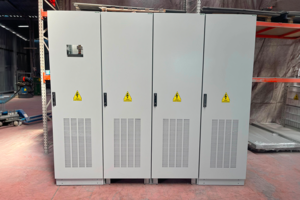
Modular Enclosures Structural Scalability and Baying Flexibility
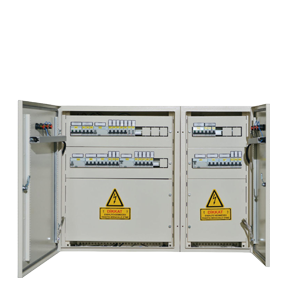
The core strength of choosing customizable configurations lies in their multi-unit connection capability. These cabinets are built with an internal symmetrical matrix profile framework rather than fixed, solid steel walls.
This design allows technicians to remove side panels and link multiple frame modules together side-by-side or back-to-back using heavy baying brackets. In 2026, this rapid expansion process ensures consistent ingress protection ratings across the entire extended panel assembly without cutting metal.
Modular Enclosures Mounting Freedom and Internal Configurations
Fixed electrical housings often restrict the placement of larger circuit breakers, busbar lines, and PLCs. Adaptable modular enclosures solve this through an internal 25mm grid hole configuration that allows for infinite component positions.
This pattern allows engineers to mount structural chassis bars, partial mounting plates, and segregation dividers anywhere inside the 3D space. You can organize your high-voltage power components in one bay while keeping sensitive data networks completely isolated in the adjacent linked compartment.
+-------------------------------------------------------+

|             MODULAR VS MONOBLOC COMPARISON            |
+---------------------------+---------------------------+

| Metric                    | Modular System Advantage  |
+---------------------------+---------------------------+

| Future Expandability      | Infinite Baying Options   |
| Internal Segregation      | Simple Partitions (F1-F4) |
| Shipping Adaptability     | Can Ship Flat-Packed      |
| On-Site Customization     | Zero Cutting Required     |
+---------------------------+---------------------------+
Modular Enclosures Logistics Management and On-Site Assembly
Shipping large, fully assembled electrical panels to remote industrial locations can be logistically challenging and expensive. Modular frames provide the option to ship units as flat-packed components, significantly lowering transit costs.
Once on-site, crews can assemble the rigid framework quickly using standard hand tools. This approach reduces transit damage risks and allows teams to move frames through narrow access doorways that wouldn’t fit a standard single-piece cabinet.
Modular Enclosures Global Standards and Safety Compliance
High-capacity automation arrays require strict adherence to international safety metrics to shield operators from arc-flash risks. High-grade modular framing systems provide built-in compliance with global manufacturing protocols.
Their structural framing and integrated internal divider kits enable simple Form 1 through Form 4 separation layouts. This matches the latest electrical codes defined in the official international electrotechnical database at iec.ch to guarantee absolute factory floor compliance in 2026.
Why Industrial Facilities Upgrading in 2026 Choose Modular Enclosures
Choosing cheaper alternatives often leads to higher maintenance costs over time. Heavy industrial environments create heavy impacts and chemical exposure that standard boxes cannot withstand. Premium enclosures offer long-term asset security, lower downtime, and superior workplace safety for your staff.
You can check our primary internal catalog at yourdomain.com to examine how modular grid channels adapt to growing component arrangements.
Summary Checklist for Modular Enclosures Selection
- Map out your five-year plant growth projections before locking down your cabinet sizes.
- Use internal divider plates to shield sensitive communication bus lines from high-voltage EMI.
- Ensure your grounding straps link every bolted frame panel together for complete electrical safety.
- Verify that the physical load limits of the internal frame match your 2026 power hardware requirements.
Transitioning to high-performance modular enclosures gives your business a flexible, future-proof automation foundation. This eliminates the need for expensive cabinet tear-outs and ensures your electrical systems are always ready to scale up.